Most people assume that dolphins can only be found in the ocean. Yet in northern Cambodia, there is a stretch of the Mekong where the rounded grey backs and short beaks of Irrawaddy dolphins still break the surface of the river.
Very few places on Earth offer this experience today. Every sighting feels less like a tourist attraction and more like a rare privilege—the chance to see an animal that could disappear within our lifetime.
Among the Rarest Dolphins on Earth
Irrawaddy dolphins look very different from the ocean dolphins most people know.
They have rounded foreheads instead of long beaks, small dorsal fins, and a calm, unhurried way of swimming. They rarely leap completely out of the water. More often, a smooth back appears first, followed by a small fin, before the animal quietly slips beneath the surface again.
That is what makes watching them so special. You are not waiting for dramatic acrobatics. Instead, you learn to notice the smallest movements on the river.
Only a Small Population Remains
Irrawaddy dolphins once inhabited large stretches of the Mekong River.
Today, only a small population survives in a handful of deep pools in northern Cambodia. Fishing nets, changes to the river’s ecosystem, and human activity continue to threaten their future.
Every encounter therefore carries unusual significance. You are not simply watching beautiful wildlife—you are witnessing one of the last surviving symbols of the wild Mekong.
No One Knows Where They Will Appear
Dolphin watching takes place from small wooden boats.
The boat drifts slowly across the river, and conversation gradually fades away. Then, somewhere nearby, you hear the brief sound of a dolphin taking a breath. A curved back breaks the surface for just a few seconds before the water becomes perfectly still once again.
That unpredictability is exactly what makes the experience unforgettable. The dolphins decide when, and if, they want to reveal themselves.
The Mekong Feels Different Here
Even without the dolphins, this part of Cambodia is worth the journey.
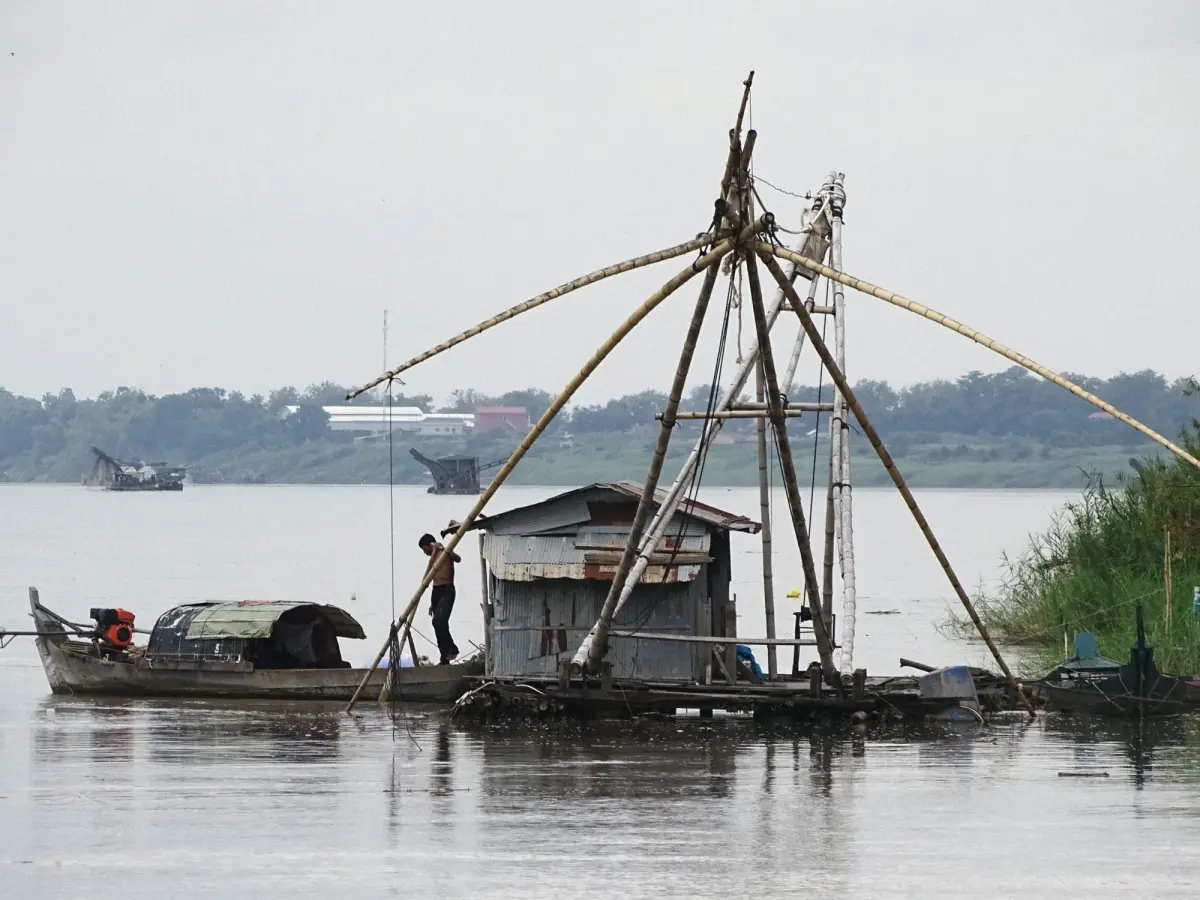
Near Kampi, the Mekong becomes remarkably wide and peaceful. Small islands divide the river, flooded trees rise from the water, and traditional fishing villages line the banks while the current moves almost imperceptibly.
It is easy to understand why this quiet stretch of the river has remained one of the last refuges for these remarkable animals.
Practical Information
Where It Is
Kampi is located about 15 kilometres north of the town of Kratie, on the banks of the Mekong River.
How to Get There
Most visitors travel from Kratie by tuk-tuk, motorbike, or car. The journey usually takes between 20 and 30 minutes.
When to Visit
The best time to look for dolphins is early in the morning or late in the afternoon. The river is usually calmer during these hours, making sightings more likely.
How Much Time You Need
A typical boat trip lasts about one hour. It is worth allowing extra time to enjoy the riverside and take in the peaceful surroundings.
What to Bring
Bring a hat, drinking water, sunscreen, and, if you have one, a pair of binoculars. They allow you to observe the dolphins more closely without disturbing them.
Is It Worth Visiting?
This is a destination for travellers who appreciate rare encounters with wildlife rather than guaranteed spectacles. No one can promise perfect photographs or constant dolphin sightings. That uncertainty is precisely what makes the experience so memorable. Seeing one of the world’s last freshwater dolphin populations emerge from the Mekong for just a few seconds often leaves a deeper impression than any carefully staged wildlife show ever could.