Most major cities around the world follow a similar pattern. The farther you want to get from the noise and pace of urban life, the farther you need to travel. Parks gradually give way to suburbs, and true mountain trails often require a dedicated day trip or even a weekend away.
Seoul works differently.
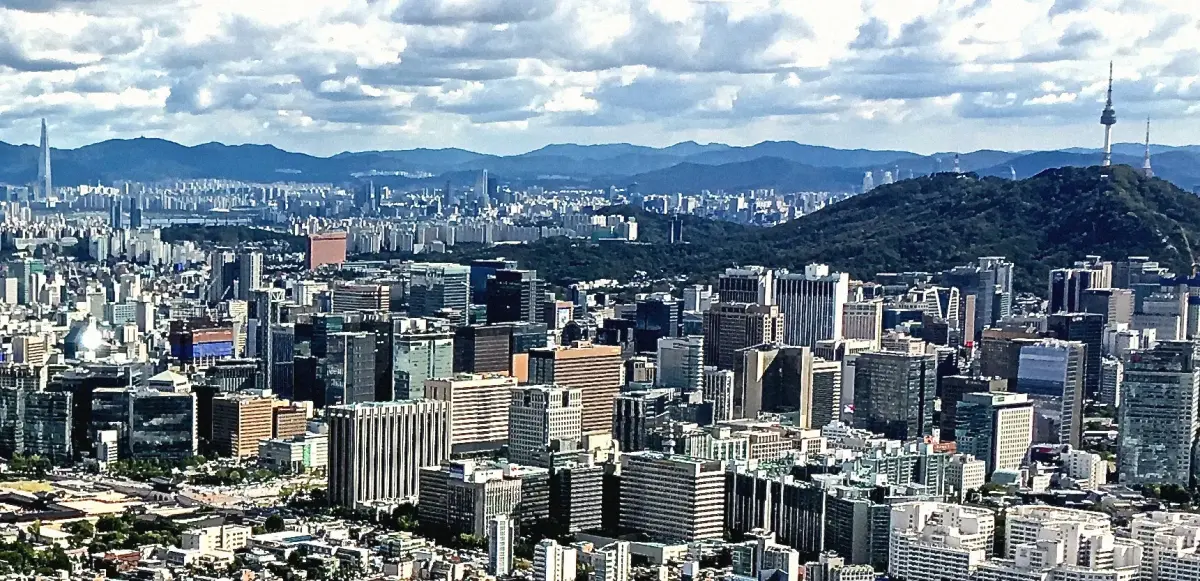
Here, the mountains do not sit somewhere beyond the city limits. They are woven directly into the city itself. They appear between apartment towers, office buildings, and modern neighborhoods. From the windows of the subway, you can often spot hikers already making their way up forested slopes. It is remarkable to realize that in a city of more than nine million people, a mountain hike can begin just minutes after stepping out of a metro station.
That is why hiking in Seoul is not simply a recreational activity for tourists. It is part of the city’s identity and one of the best ways to understand how Seoul truly lives.
Why Koreans Love Hiking
For many visitors, their first encounter with Korean hiking culture happens before they ever reach a trail. Early on a weekend morning, a ride on the subway reveals groups of people dressed in colorful outdoor jackets, sturdy hiking boots, and lightweight backpacks.
In South Korea, hiking has long been woven into everyday life. With roughly seventy percent of the country covered by mountains, proximity to nature feels natural rather than exceptional. For many residents of Seoul, spending a Saturday morning on a mountain trail is as ordinary as meeting friends or visiting a café.
A hike here rarely feels like a major expedition. More often, it is a few hours outdoors, an opportunity for exercise, beautiful scenery, and a chance to step away from the pace of city life. That is why trails are filled with people of all ages, from university students to retirees.
Bukhansan: A National Park Inside a Megacity
One of Seoul’s most remarkable places is Bukhansan.
In many countries, a national park suggests long drives, remote wilderness, and careful planning. In Seoul, the experience is entirely different.
Bukhansan lies so close to the urban landscape that it is difficult to believe you are entering a national park. Within a short time after leaving the subway, city streets begin to disappear behind forest paths, while modern neighborhoods remain far below.
The park is famous for its dramatic granite peaks. Pale stone formations rise above the forest and create landscapes that feel more reminiscent of iconic mountain regions in North America or China than the center of one of Asia’s largest cities. As hikers climb higher, increasingly expansive views of Seoul begin to unfold. Skyscrapers, bridges crossing the Han River, and endless residential districts stretch across the horizon.
Bukhansan reveals one of Seoul’s defining characteristics: nature and the city do not compete for space. They coexist.
Inwangsan: The Best View of Historic Seoul
If Bukhansan impresses through scale, Inwangsan offers a completely different perspective.
The trail follows sections of the historic city wall that once protected the capital. As the path climbs higher, visitors gain a view that brings together multiple layers of Korean history. Traditional neighborhoods, royal palaces, and modern districts spread across the landscape below, while distinctive rock formations rise around the mountain itself.
Inwangsan is not the tallest mountain in Seoul, but it may be the most revealing. From its summit, some of the finest views of the historic city center come into focus. It becomes clear how Seoul developed around its mountains rather than in spite of them.
For travelers interested in combining hiking with history, few places are more rewarding.
Namsan: A Mountain at the Heart of the Capital
Among Seoul’s hiking destinations, Namsan is one of the most accessible.
Located near the center of the city, the mountain has become one of Seoul’s most recognizable landmarks. Many people know it because of N Seoul Tower, yet the mountain itself deserves equal attention.
Hiking here feels different from the more rugged routes elsewhere in the city. Instead of steep rock faces and demanding climbs, visitors find well-maintained paths, scenic viewpoints, and relaxed walking routes. Namsan demonstrates that hiking in South Korea does not always require endurance or technical skill.
The mountain becomes especially beautiful after sunset. As the city lights begin to glow, Seoul transforms into a vast sea of illumination stretching in every direction. At that moment, it becomes easy to understand why residents return here again and again.
Gwanaksan: The Mountain of Local Seoul
Many visitors focus on the city’s most famous mountains, but those who want to experience a more everyday side of Seoul’s hiking culture should look toward Gwanaksan.
Located near several university districts, the mountain is particularly popular among local residents. There are fewer tour groups and more Seoulites treating the trail as a normal part of their weekend routine.
The routes pass through forests, granite outcrops, and viewpoints overlooking the southern districts of the city. The atmosphere feels different from Bukhansan. It is quieter, less visited by tourists, and more closely connected to local life.
Places like Gwanaksan reveal that South Korea’s passion for hiking is not a marketing image. It is a genuine part of everyday culture.
What Makes Hiking in Seoul So Special
In many cities around the world, people must choose between urban life and nature. Seoul rarely forces that choice.
You can spend the morning in a modern district surrounded by skyscrapers, be walking through a forest less than an hour later, and return to the center of one of Asia’s largest cities by evening. This combination is far rarer than it seems.
That is why hiking in Seoul offers more than beautiful scenery. It provides insight into how a major global city has learned to live alongside its mountains and make them part of everyday life.
Many travelers come to Seoul for palaces, markets, food, and modern architecture. Yet for a surprising number of visitors, the mountain trails become the place where the city reveals its most unexpected side. From the summit of any of these peaks, it becomes clear that Seoul cannot be fully understood from its streets alone.