In most cities, architecture becomes part of the background. People notice a façade, take a few photographs, and continue on their way. In Seoul, some buildings resist that approach. They are difficult to appreciate from the outside alone. A photograph may capture their shape and perhaps their scale, but the most interesting impressions begin only after stepping inside. At that moment, architecture stops being an object to observe and becomes a space to move through.
Architecture That Changes Human Scale
One of the most unusual sensations in Seoul is connected not to the height of buildings but to the size of their interior volumes. In some contemporary spaces, people stop feeling like the central element of the scene. Staircases become wider than expected, ceilings rise dozens of meters overhead, and walls begin to feel more like parts of an artificial landscape than elements of a building. This is why photographs can be misleading. An image may show the form, but it cannot convey the distance between walls, the height of a space, or how small a person appears within it. Many of Seoul’s cultural and exhibition venues are built around this idea. Here, architecture works through scale.
Where to find these spaces in Seoul:
— Dongdaemun Design Plaza (DDP) — Nodeul Island — Seoul Museum of Art (selected exhibition halls) — Blue Square Cultural Complex
Architecture Without Straight Lines
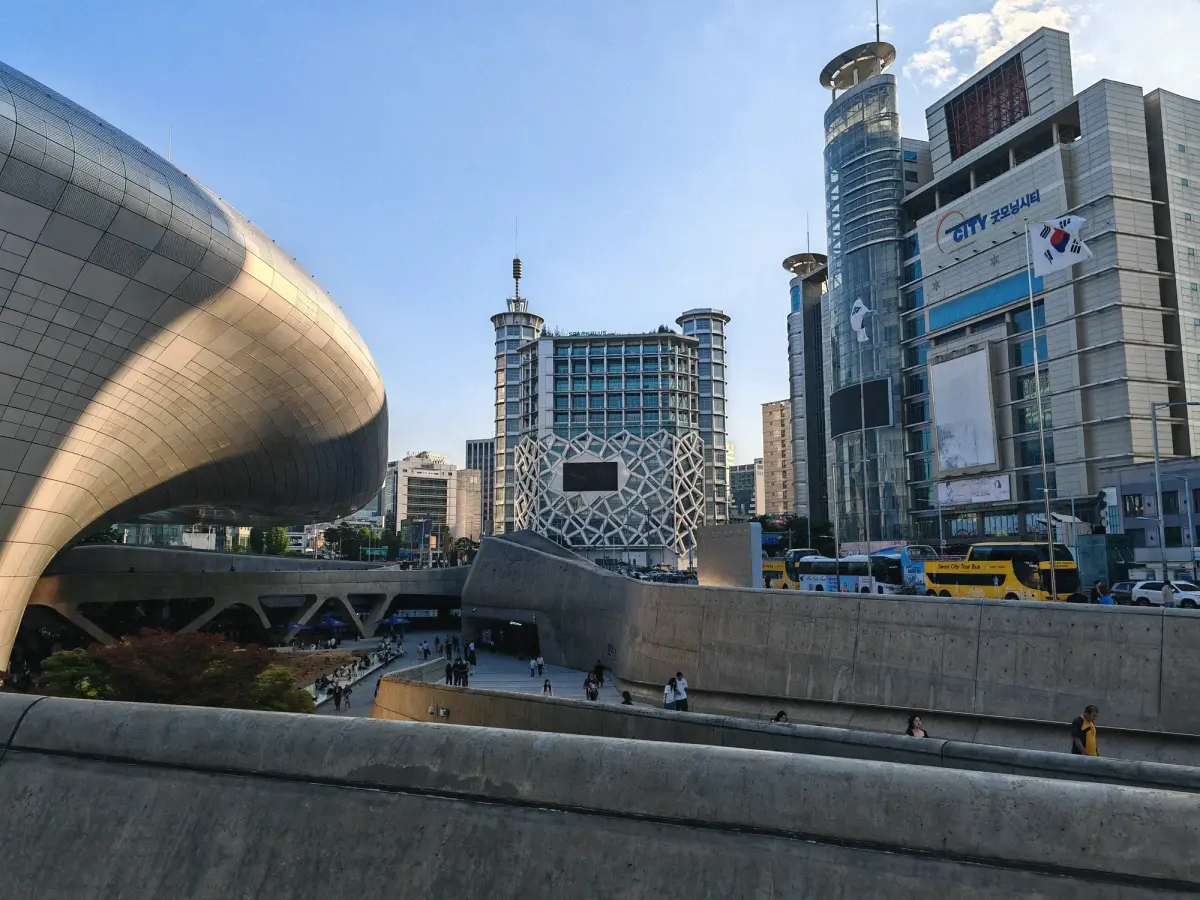
Modern Seoul embraces forms that are difficult to describe using familiar vocabulary. Some buildings resemble waves, while others look as though they were carved from a single piece of material. At times it seems as if the architect intentionally abandoned right angles and conventional geometry. As you walk around these structures, they appear different from every new viewpoint. A few steps can completely change the perspective. New lines and volumes emerge that were invisible only moments earlier. Exploring this type of architecture feels less like viewing a building and more like moving around a sculpture.
Where to find these spaces in Seoul:
— Dongdaemun Design Plaza (DDP) — Amorepacific Headquarters — Some Sevit Floating Islands — COEX Artium
Architecture Built from Light
Some places in Seoul change throughout the day more dramatically than expected. Morning light emphasizes certain details, while evening light creates an entirely different atmosphere. Glass surfaces begin reflecting the city, internal courtyards fill with shadows, and metal changes its appearance depending on the weather. Because of this, the same location can leave a completely different impression in the morning and in the evening. Here, architecture works not only with form but also with time.
Where to find these spaces in Seoul:
— Leeum Museum of Art — Amorepacific Headquarters — SongEun Art Space — Seoul Botanic Park Magok
Spaces That Cannot Be Understood from the Outside
Some buildings reveal almost nothing through their façades. From the street, they may appear relatively modest, yet behind the entrance lies a vast atrium, a monumental reading hall, a large exhibition space, or a complex sequence of interior routes. Seoul has many places designed this way. Some intentionally build anticipation step by step. A visitor first sees an ordinary entrance, then a staircase, then another level, and eventually a space far larger than expected. This is why some buildings are best experienced not through photographs of their exterior, but through movement within them.
Where to find these spaces in Seoul:
— Starfield Library — National Museum of Korea — Seoul Arts Center — Seoul Hall of Urbanism & Architecture
Seoul as a Laboratory of the Future
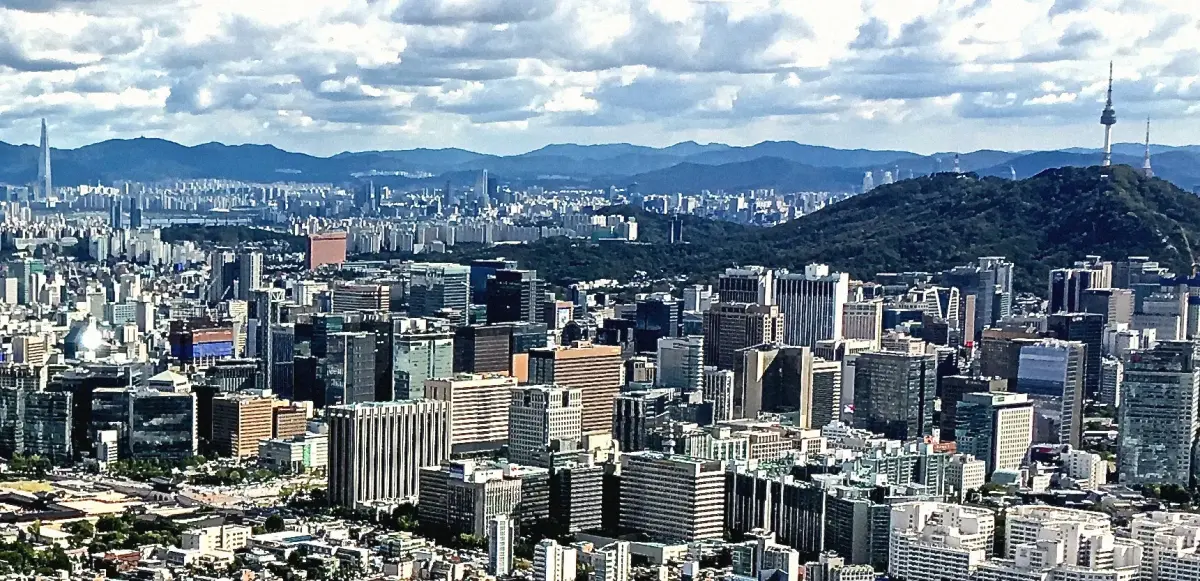
The city’s architecture is constantly evolving. New cultural centers, public spaces, office complexes, pedestrian routes, and media façades continue to appear. Alongside buildings constructed decades ago, projects emerge that would have seemed like science fiction not long ago. These architectural experiments are not concentrated in a single district. They appear throughout the city and gradually become part of everyday life. For that reason, Seoul is fascinating not only as the capital of South Korea but also as a place where new ideas about the future of cities are continually being tested.
Where to find these spaces in Seoul:
— Seoul Robot & AI Museum — Magok District — Digital Media City (DMC) — Lotte World Tower — Seoullo 7017
Where to Begin Exploring Architectural Seoul
Rather than trying to check individual buildings off a list, it is more rewarding to seek out different types of spaces. Spend part of a day inside a large cultural center, visit the observation deck of a modern skyscraper, walk into a library that has become an architectural landmark in its own right, explore contemporary public spaces, and compare historic urban landscapes with modern districts. Gradually it becomes clear that Seoul’s architecture is not simply a collection of structures scattered across a map. It is one of the most revealing ways to understand the city through scale, light, form, and space.