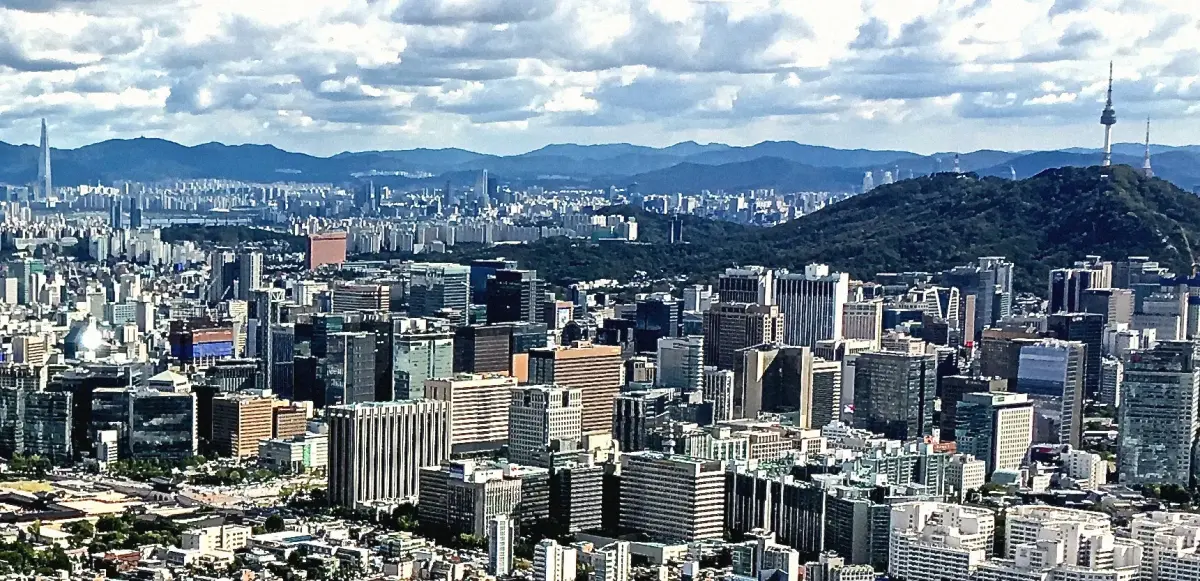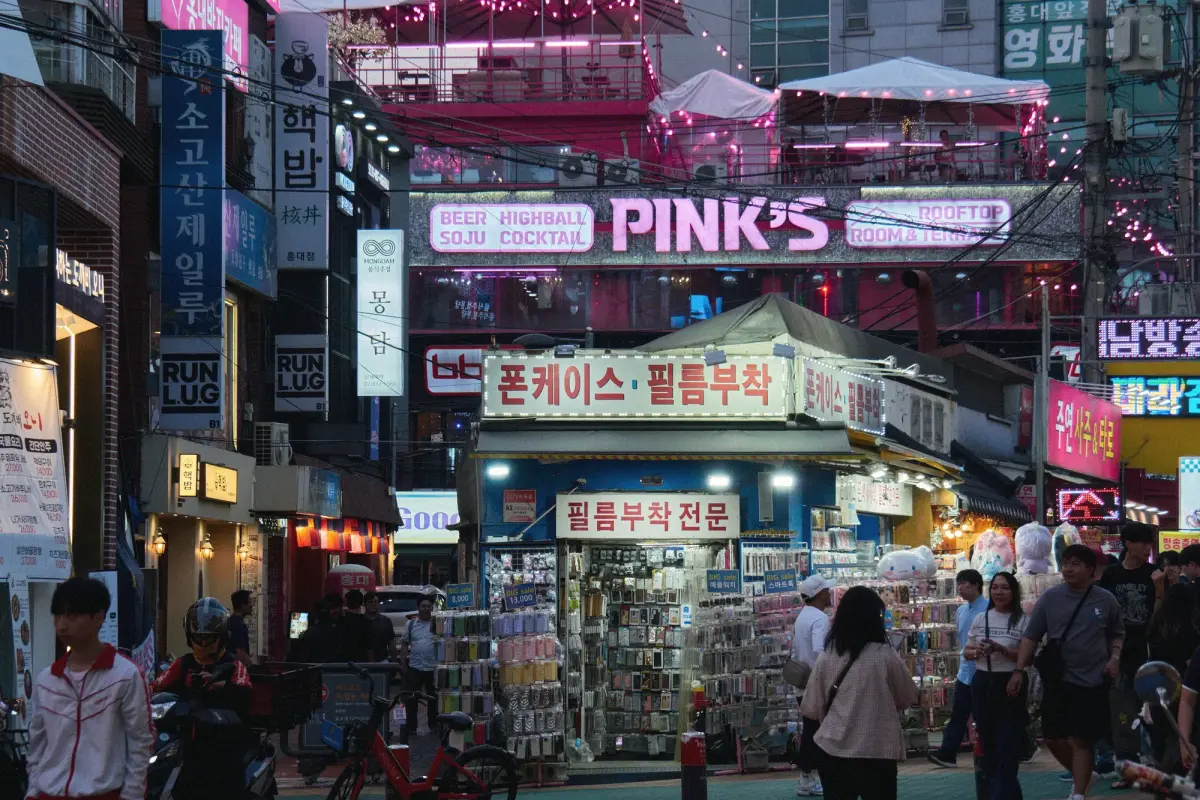
South Korea is most often associated with Seoul, mountain national parks, historic palaces, temples, markets, and modern cityscapes. It is an understandable image of the country, as most journeys begin in major cities and follow routes across the mainland. Yet South Korea has another geography that often remains beyond a traveler’s first introduction to the country.
Scattered along its coastline are thousands of islands. Some lie only a short distance from the mainland, while others require hours of travel across the sea. Some are known for volcanic landscapes, others for fishing villages, dramatic cliffs, sea winds, and ways of life that feel noticeably different from urban Korea. For this reason, South Korea’s islands should not be seen as a simple addition to a mainland itinerary. They offer an entirely different way of experiencing the country.
Islands That Could Never Be Seen All at Once
South Korea has more than three thousand islands. The exact number varies slightly depending on the source, but figures between 3,300 and 3,400 islands are commonly cited. Only a few hundred are inhabited, while the rest remain uninhabited or are used only seasonally.
Most of these islands are concentrated along the southern and western coasts. There, the shoreline is fragmented into bays, channels, small archipelagos, and island groups. On a map they may appear as scattered dots surrounding the mainland, but in reality each one can feel like a separate world.
That is why South Korea’s island geography cannot be understood through a single trip. The goal is not to see every island, but to appreciate how different islands within the same country can be.
Volcanic Islands
The most famous island in South Korea is Jeju. Many people view it almost as a separate destination within the country, and there is good reason for that. Jeju differs from mainland Korea not only in climate and atmosphere, but also in the origins of its landscape.
The island was formed by volcanic activity. At its center stands Hallasan, the highest mountain in South Korea. Across the island are lava fields, volcanic cones, lava tubes, black-rock coastlines, and landscapes that look very different from the mountain regions found on the mainland.
Jeju demonstrates that an island can be more than a piece of land surrounded by water. It can function as an independent geological world. Here, travel revolves around volcanoes, coastlines, wind, rural roads, and wide-open spaces.
Islands of the Open Sea
A completely different experience awaits on Ulleungdo. Located in the East Sea, far from the country’s most common travel routes, the island is unlike Jeju or the smaller islands near the southern coast.
Ulleungdo has very little flat land. Its coastline rises sharply from the sea, roads cling to steep slopes, and many of its most memorable views are defined by dramatic cliffs and open water stretching in every direction. The sense of separation from the mainland is especially strong here.
This is not an island that feels like a seaside extension of a city trip. It is a destination where the ferry journey, the weather, the ocean, and the island’s remoteness become central parts of the experience.
Islands of Fishing Villages
On some islands, the strongest impression comes not from the landscape but from life by the sea itself. Heuksando, located within an island group off the country’s southwestern coast, is a good example.
Here, travel revolves around small harbors, coastal roads, fishing settlements, and communities whose daily lives remain closely connected to the sea. Boats, piers, seafood markets, and short crossings between islands become part of the journey.
Places like this reveal a side of South Korea that exists beyond the pace of major cities. On islands shaped by fishing culture, the rhythm of the day is often determined by weather, tides, ferry schedules, and the activity of the harbor.
Islands of Cliffs and Sea Stacks
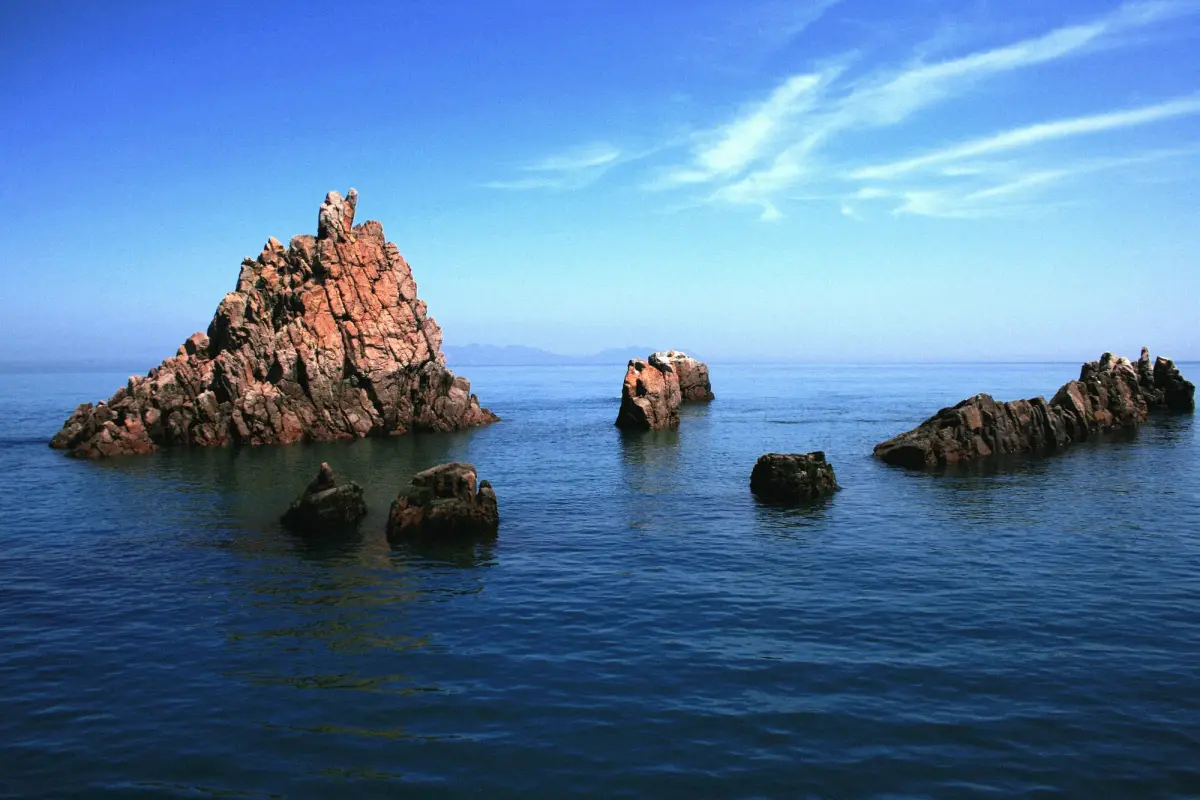
Hongdo is best known for its coastline. The island is famous for its reddish cliffs, sea arches, rock formations, and coastal scenery that is often best appreciated from the water.
Here, the island feels less like a destination for wandering through villages and more like a natural monument shaped by the sea. The perspective changes constantly. One view appears from shore, another from a boat. Cliffs rising directly from the water create a coastline that cannot be fully understood from a single photograph.
Hongdo demonstrates that South Korea’s islands can be fascinating not only because of their communities or beaches, but also because of the shapes carved into their coastlines by nature.
Why Island Korea Feels So Different
Mainland South Korea is often experienced through cities, mountains, temples, transportation networks, and dense development. The islands tell a different story. Life here depends more heavily on the sea, ferry connections, weather conditions, distances, and the relationship with the mainland.
On some islands, volcanic landscapes dominate the experience. On others, fishing communities define daily life. Some are remembered for their cliffs, while others leave an impression through their remoteness and their connection to the open sea.
For that reason, island South Korea does not replace the country’s more familiar destinations. Instead, it adds another layer to them. Without it, the image of South Korea remains incomplete — too mainland-focused, too urban, and too predictable.