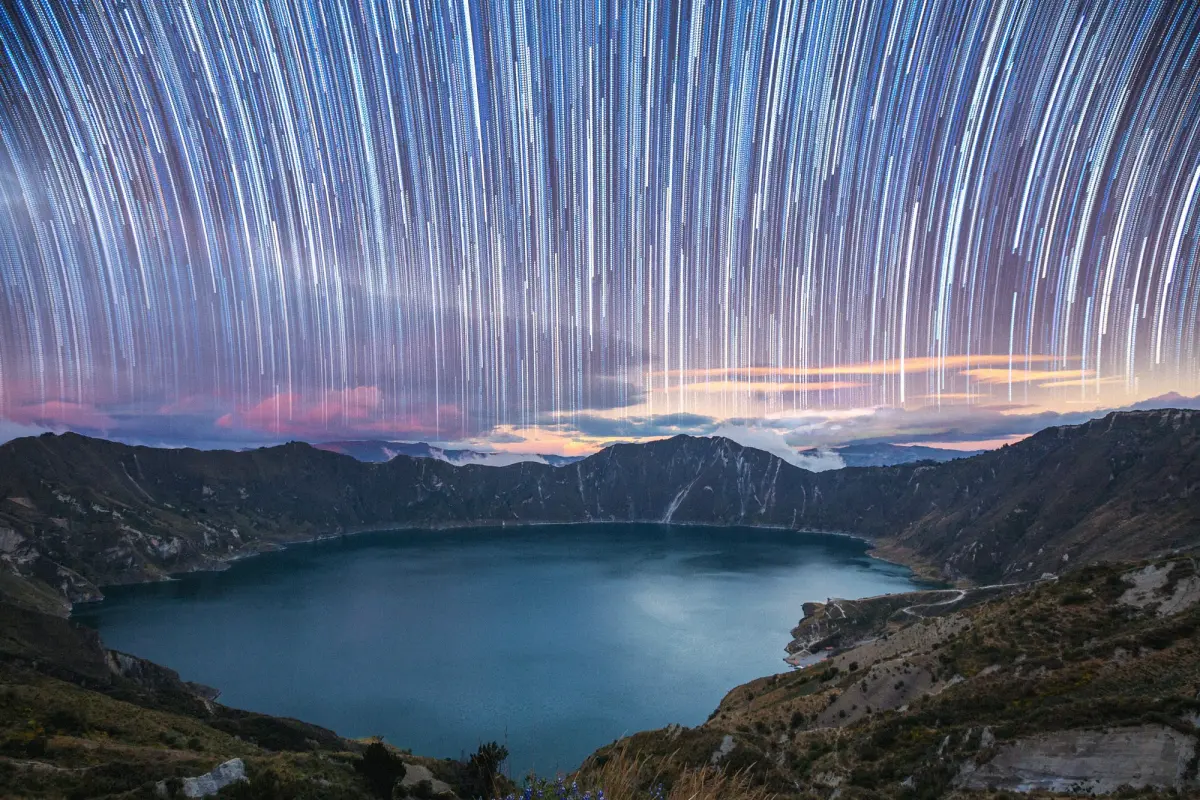
Some roads are lined with trees. Others pass through vineyards or follow the shores of lakes. In Ecuador, there is a road where one towering volcano rises after another. Some are capped with permanent snow, some are still active, and nearly every one dominates the surrounding landscape. Few places in the world offer a journey quite like this.
A Horizon Filled with Volcanoes
The Avenue of the Volcanoes is a broad valley stretching through central Ecuador between the two ranges of the Andes. Dozens of volcanoes are concentrated here, including Chimborazo, Cotopaxi, Cayambe, Antisana, Tungurahua, and many others. On a clear day, their snow-covered summits appear one after another, as though they had been carefully placed along the same road.
In many countries, seeing a single beautiful volcano would be considered a highlight. Here, you can admire several completely different volcanic giants in a single day, each with its own distinctive shape, character, and geological history.
Why Are There So Many Volcanoes?
The answer lies deep beneath the Earth’s surface. The Nazca Plate is slowly sliding beneath the South American Plate, melting rock and generating magma in the process. Over millions of years, that magma has repeatedly reached the surface, creating this remarkable chain of volcanoes.
The process is still ongoing today. Some volcanoes have long since become extinct, others remain dormant, and several are still volcanically active. That makes the Avenue of the Volcanoes not only breathtakingly beautiful, but also one of the most geologically active regions in South America.
Every Peak Looks Different
Although these volcanoes share the same origin, none of them look alike. Cotopaxi rises as an almost perfectly symmetrical cone, while Chimborazo forms an enormous snow-covered massif. Some summits are completely blanketed in ice, others end in dark volcanic cliffs, and a few still conceal craters that continue to release volcanic gases.
As the journey continues, you begin to realise that the scenery never repeats itself. Instead, it feels like travelling through a gallery where every volcano has its own unique identity.
A Road That Makes You Want to Stop Again and Again
The most remarkable thing about the Avenue of the Volcanoes is that it is not defined by a single destination. The journey itself becomes the main attraction. Around every bend, another snow-covered summit appears, followed by another one just a few kilometres farther along.
The experience feels almost cinematic. Rather than simply driving from one place to another, it seems as though someone is slowly turning the pages of an enormous geography book before your eyes.
You Feel the Altitude the Entire Time
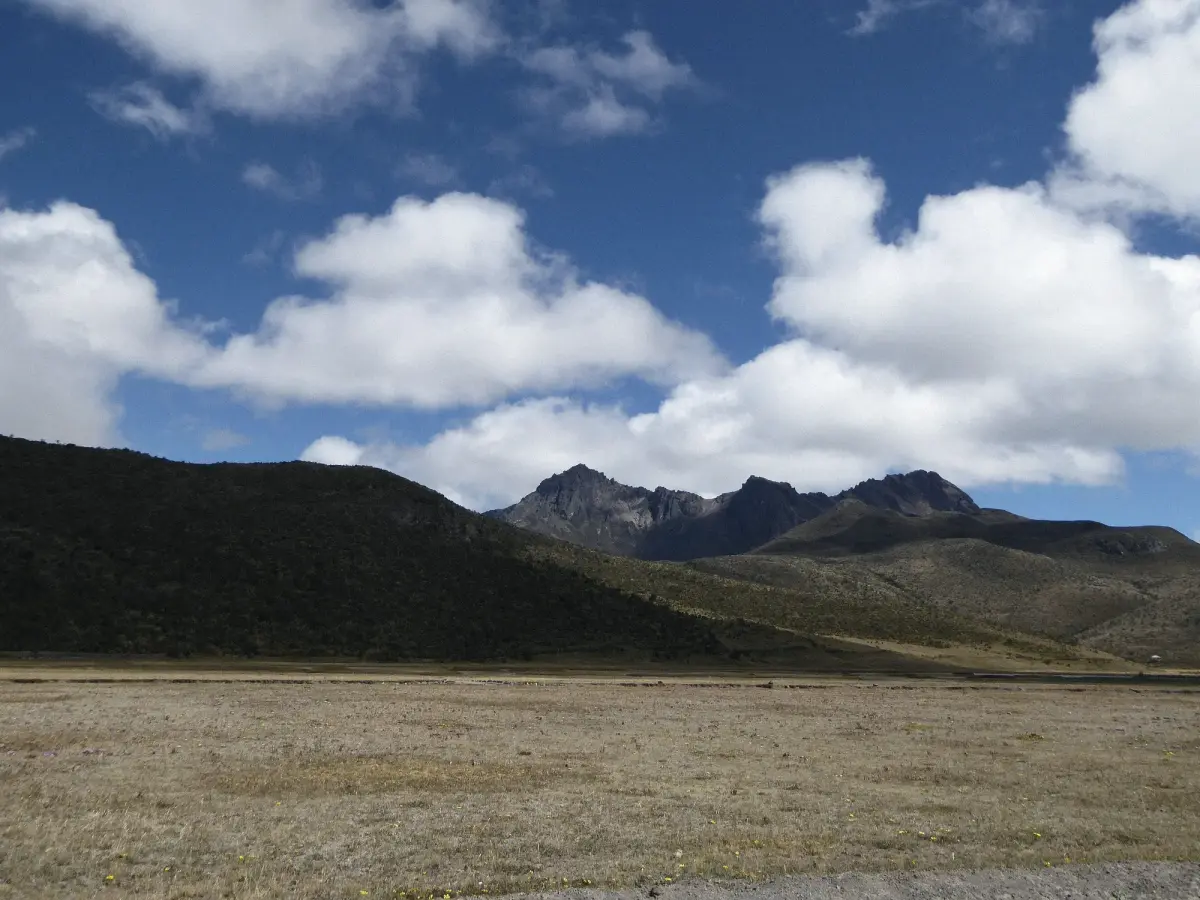
Much of the route lies more than 3,000 metres above sea level. The air becomes cooler, the sunlight noticeably brighter, and the vegetation gradually changes as you climb higher. Vast páramo grasslands, herds of llamas and vicuñas, small mountain villages, and endless open landscapes make this region unlike almost any other mountain road in the world.
Even if you never climb a volcano, the feeling of being in the high Andes never leaves you. It is this constant sense of elevation that gives the Avenue of the Volcanoes its unforgettable atmosphere.
Practical Information
Where It Is
The Avenue of the Volcanoes runs through central Ecuador between Quito and Riobamba. Most of the route follows the Pan-American Highway, passing through the valley between the two main Andean mountain ranges.
How to Get There
The best way to explore the Avenue of the Volcanoes is by car. Regular buses also connect the towns along the route, while organised tours visit many of the most famous volcanoes. If you have limited time, choosing one or two national parks, such as Cotopaxi or Chimborazo, is an excellent option.
How Much Time You Need
The main viewpoints can be enjoyed in a single day while travelling between Quito and Riobamba. However, spending three to five days in the region allows for a much richer experience. With more time, you can visit several national parks, take short hikes, and see the volcanoes under different weather and lighting conditions.
When to Visit
The Avenue of the Volcanoes can be explored throughout the year. The clearest views are usually found in the morning before clouds gather around the summits. The dry season generally offers more reliable weather, although mountain conditions can change rapidly at any time of year.
What to Bring
Weather at high altitude changes quickly. Even on sunny days, you should bring warm clothing, a windproof jacket, sunglasses, and high-SPF sunscreen. If you plan to explore the national parks on foot, comfortable hiking shoes are strongly recommended.
Is It Worth Visiting?
The Avenue of the Volcanoes is an extraordinary destination for travellers who love dramatic landscapes and scenic road trips. It is not a place defined by a single landmark, but by an entire journey where the road itself becomes the experience. If you want to see several snow-capped volcanoes in a single day and discover just how diverse the Andes can be, there are few places in the world that compare.