Most tunnels begin with an engineer’s blueprint. The lava tunnels of the Galápagos Islands began with a river of molten rock. Long before people ever walked through them, they served as underground highways for flowing lava. That is why exploring them feels less like visiting a cave and more like stepping inside an ancient volcanic eruption.
The Path Once Taken by Lava
As you enter a lava tunnel, it is hard to imagine that molten rock once rushed beneath your feet. Today the air is cool, the silence is almost complete, and the walls appear perfectly still. Yet this hollow passage was once filled with lava heated to well over a thousand degrees Celsius. Every step follows the exact route where liquid rock once flowed through the island.
How a Volcano Builds a Tunnel
Lava tunnels are created by an extraordinary natural process. During a gentle eruption, the surface of a lava flow cools first, forming a hard crust while molten lava continues moving beneath it. Once the eruption ends, the remaining lava drains away, leaving behind a long hollow tube beneath the ground. It is a remarkable sequence of events: first the roof is created, and only afterwards does the river disappear.
Why the Inside Looks So Unusual
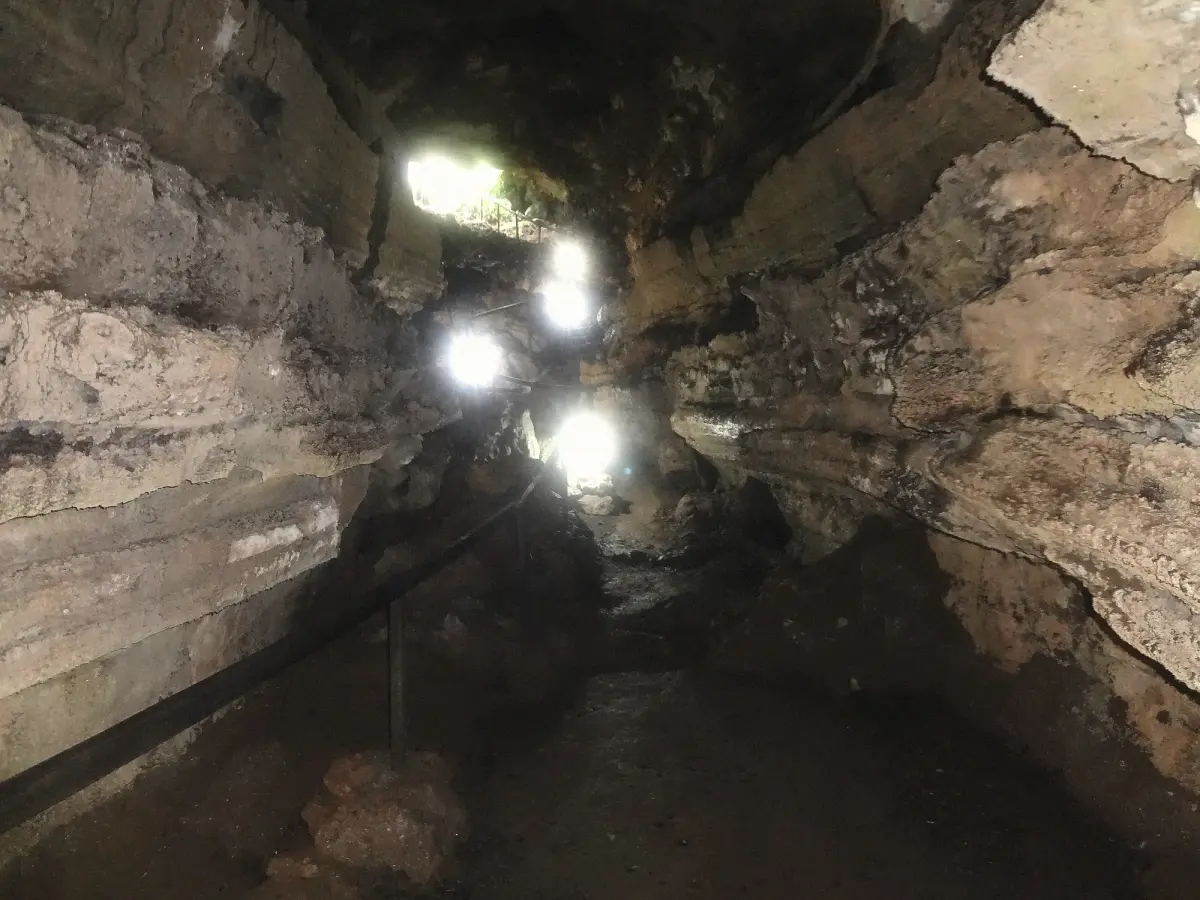
A lava tunnel looks nothing like an ordinary cave. Its walls are smooth and rounded because they were shaped by flowing lava rather than carved away by water. If you look closely, you can still see frozen waves, ripples, and grooves that record the movement of the molten rock. In some places, droplets of solidified lava hang from the ceiling, while collapsed sections allow shafts of sunlight to reach the tunnel floor.
Time Feels Different Here
For a volcano, creating a tunnel is a surprisingly brief event. Sometimes it takes only a few hours or a few days for a lava flow to carve its underground passage before draining away. After that, an entirely different story begins, one that lasts for thousands of years. While climates, plants, and animals continue to change, the tunnel itself remains almost exactly as the volcano left it.
Why There Are So Many on the Galápagos
The Galápagos Islands exist because of volcanoes. The archipelago was formed above a hotspot in the Pacific Ocean, where magma has been rising from deep within the Earth for millions of years. Each eruption creates new lava flows, and some of those flows eventually form lava tunnels. Walking through one of them reveals that the Galápagos are not only famous for their wildlife—they are islands that are still being shaped by the planet itself.
This Is Not a Cave
At first glance, a lava tunnel looks like any other cave. In reality, its origin is completely different. Most caves around the world are formed when water slowly dissolves limestone over hundreds of thousands of years. Lava tunnels are created by fire, and the entire process can be completed in only a matter of days.
Practical Information
Where They Are
The best-known lava tunnels are located on Santa Cruz Island. Most visitors stop there while travelling from Puerto Ayora into the island’s lush highlands, where the famous giant Galápagos tortoise ranches are also found.
How to Get There
The easiest way to reach the tunnels is by taxi or as part of an organised tour. Most travellers combine the visit with the giant tortoise reserves and the Los Gemelos sinkholes, making all three stops part of a single excursion. If you are travelling independently, the drive from Puerto Ayora takes about thirty minutes.
How Much Time You Need
Exploring one lava tunnel usually takes between thirty minutes and one hour. If you enjoy taking photographs or stopping to study the volcanic formations, you may want a little longer. Combined with other attractions in the Santa Cruz highlands, it makes an excellent half-day or full-day trip.
How Difficult Is the Walk?
The route is suitable for most visitors and does not require any special fitness. However, some sections have low ceilings, so you will occasionally need to duck as you walk. There are also stairs and uneven surfaces, making comfortable closed-toe shoes the best choice.
When to Visit
The lava tunnels can be visited throughout the year. Inside, the temperature remains pleasantly cool even on the hottest days. Because most of the walk takes place underground, seasonal changes have very little effect on the experience.
What to Bring
Wear comfortable shoes with good grip, as some sections can be uneven. A light jacket is useful if you tend to feel cold in cooler underground environments. A camera that performs well in low light will also help you capture the textures and shapes inside the tunnels.
Are There Any Restrictions?
Most of the tunnels open to visitors have walkways and are considered safe to explore. Some sections can only be visited with a guide to help protect these fragile volcanic formations. Visitors should always stay on the marked paths to preserve the tunnels in the remarkable condition they have remained in for thousands of years.
Can You Combine Them with Other Attractions?
The lava tunnels are easy to combine with a visit to the giant tortoise ranches and the Los Gemelos sinkholes. Together, these places reveal two very different sides of the Galápagos: the extraordinary wildlife that makes the islands famous today, and the volcanic forces that created the islands in the first place. It is one of the most rewarding day trips on Santa Cruz Island.
Is It Worth Visiting?
The lava tunnels are especially rewarding for travellers who want to understand how our planet works. You will not find glittering stalactites, enormous underground chambers, or colourful lighting displays here. Their appeal lies somewhere entirely different: you are walking through a passage once carved by molten lava. Few places offer such a direct opportunity to step inside the path of an ancient volcanic eruption and witness how volcanoes create not only mountains, but entire underground worlds.