When most people think of Laos, they picture hot lowlands, tropical forests, and the slow-moving Mekong River. Yet in the south of the country, there is a place that feels completely different.
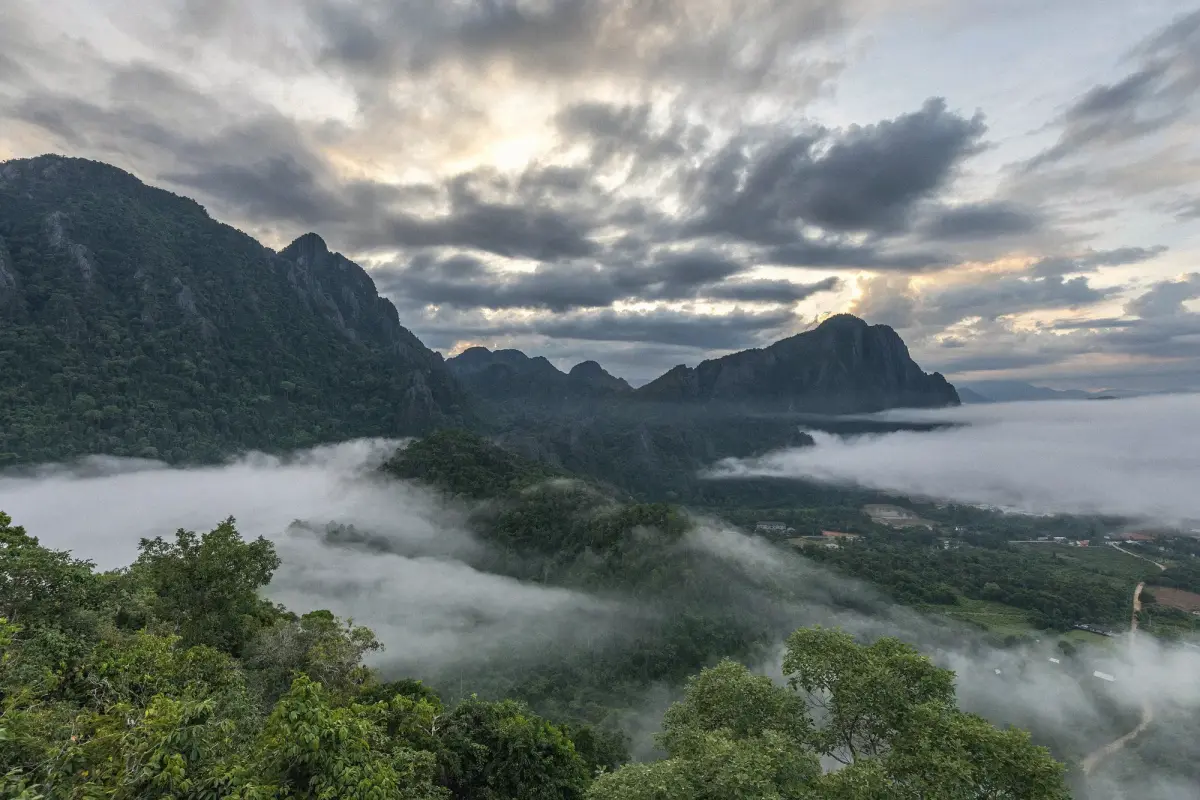
The Bolaven Plateau welcomes visitors with cool mountain air, rolling green hills, coffee plantations, and dozens of spectacular waterfalls. In a single day, you can discover several cascades, each with its own landscape, atmosphere, and character.
A Volcano Created the Perfect Landscape
Millions of years ago, powerful volcanic eruptions covered the region with thick layers of lava. Over time, those volcanic rocks weathered into exceptionally fertile soil.
That rich soil gave rise to dense forests, countless rivers, and some of Southeast Asia’s finest coffee plantations. Even today, the volcanic earth remains the foundation of everything that makes the plateau unique.
Every Waterfall Feels Different
In many destinations, waterfalls begin to look surprisingly similar. On the Bolaven Plateau, they never do.
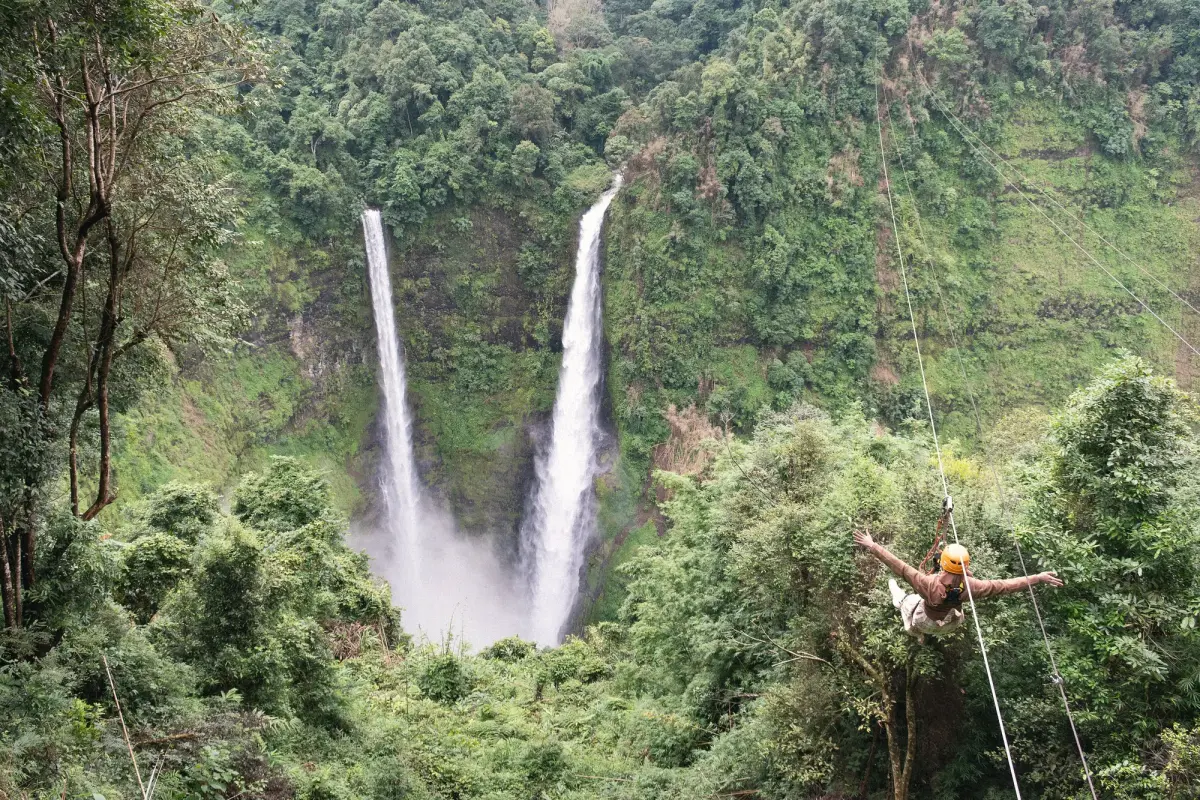
Here, you can stand before a narrow ribbon of water plunging into a deep canyon, walk to a broad cascade hidden in the jungle, or watch an entire river crash over a cliff in multiple streams. Among the best-known waterfalls are Tad Fane, Tad Yuang, Tad Lo, and Tad E-Tu.
Exploring the plateau feels less like visiting a single attraction and more like travelling through a collection of completely different natural landscapes.
Home to Laos’ Finest Coffee
The plateau’s elevation, cool climate, and volcanic soil have created ideal conditions for growing Arabica coffee.
Today, Bolaven is the country’s most important coffee-producing region. Visitors can stop at family-run farms, learn how coffee is grown, harvested, and roasted, and enjoy a freshly brewed cup just a few metres from where the beans were cultivated.
Even if you are not a coffee enthusiast, these visits offer a fascinating glimpse into one of Laos’ most important agricultural traditions.
The Climate Changes Completely
The Bolaven Plateau sits between roughly 1,000 and 1,350 metres above sea level.
As a result, temperatures here are noticeably cooler than across the rest of southern Laos. After the heat of the lowlands, the fresh mountain air feels especially refreshing, making long walks to the waterfalls far more enjoyable.
That dramatic contrast is one of the reasons the plateau feels unlike anywhere else in the country.
Practical Information
Where It Is
The Bolaven Plateau is located in Champasak Province in southern Laos. The nearest major city is Pakse.
How to Get There
Most travellers begin their journey from Pakse. The plateau is best explored by rented motorbike, car, or organised tour.
How Much Time You Need
One full day is enough to visit several waterfalls. However, spending two or three days allows you to explore the plateau at a slower pace, visit coffee farms, and enjoy everything the region has to offer.
When to Visit
The most pleasant weather is from November to February. Shortly after the rainy season, the waterfalls are at their most powerful, while the surrounding forests are at their greenest.
What to Bring
Bring a light jacket, comfortable walking shoes, a rain jacket during the wet season, and plenty of time. The Bolaven Plateau has a way of making you stop far more often than you planned.
Is It Worth Visiting?
The Bolaven Plateau is perfect for travellers who enjoy combining beautiful scenery with slow, rewarding journeys. Its appeal does not lie in one iconic landmark. Instead, it comes from the remarkable variety packed into a single region, where every turn in the road seems to reveal another waterfall, another coffee plantation, and another reason to keep exploring.