A beautiful city is not necessarily the one with the most beautiful buildings.
Some cities are filled with magnificent churches, elegant squares and remarkable monuments, yet after only a few streets your eyes begin to tire. Facades compete for attention, signs interrupt the architecture, newer buildings ignore their surroundings, and the city starts to feel like a collection of separate objects rather than a coherent place.
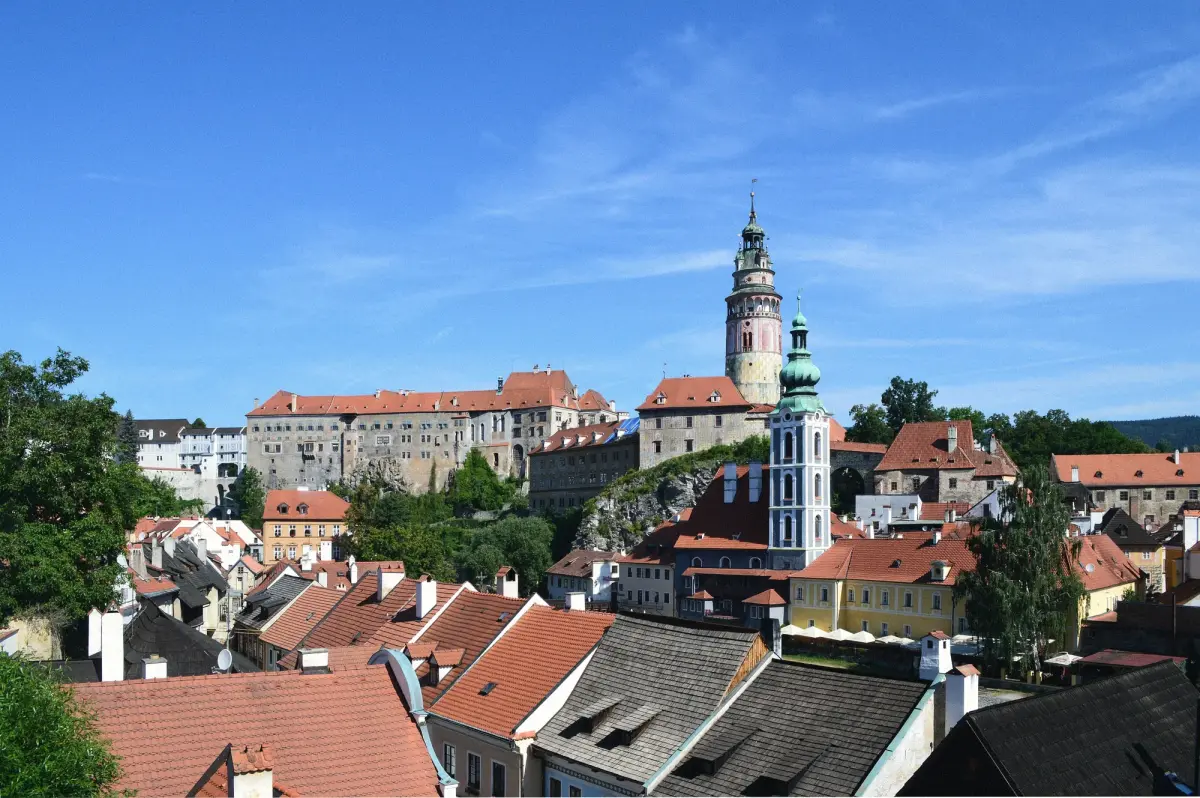
Many of Czechia’s historic towns create the opposite impression. Your eyes quickly find a sense of order: the line of rooftops, a tower at the end of a street, a square with clearly defined edges, a castle above the river or a hill completing the skyline. Instead of feeling assembled piece by piece, the town seems to exist as a single composition.
Where does that feeling come from?
When Different Centuries Speak Without Competing
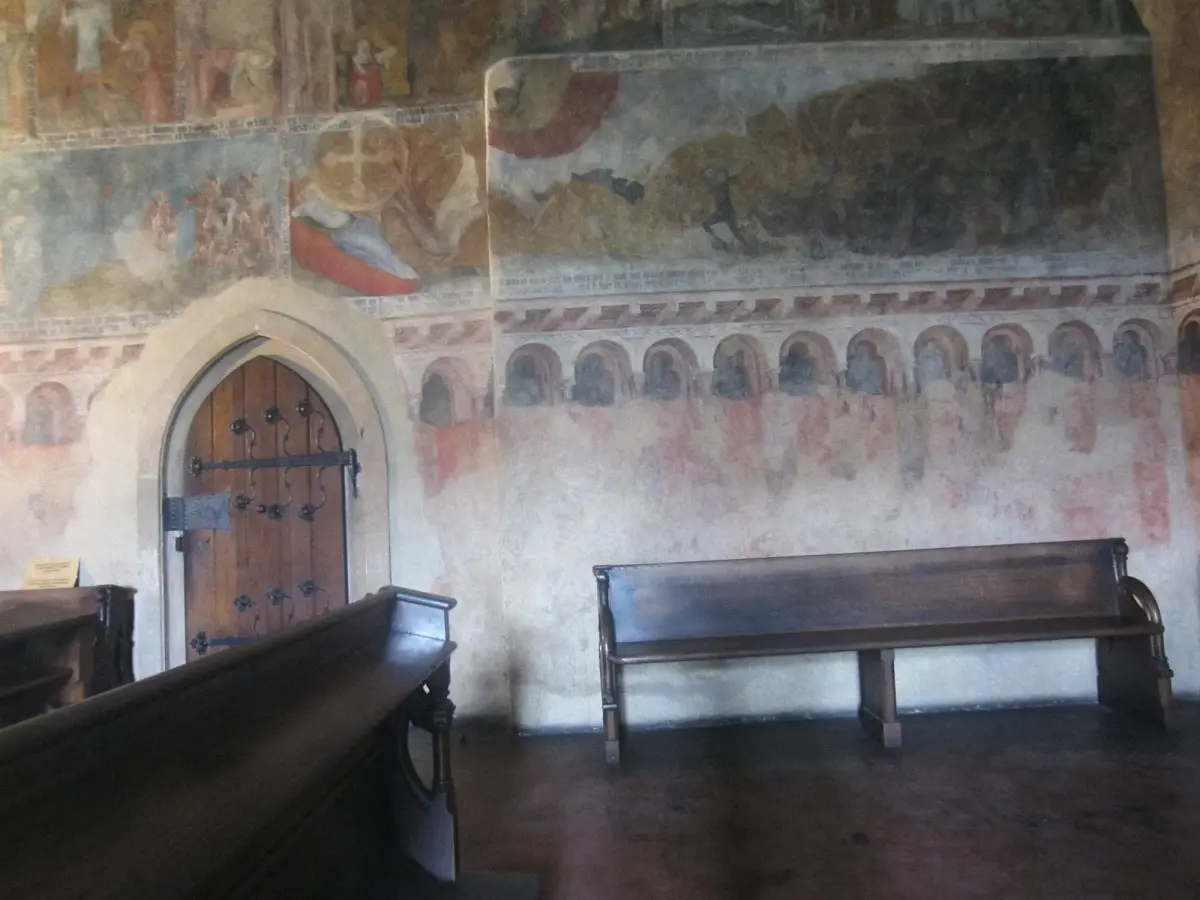
Czech towns are anything but uniform. In Prague, Telč and Český Krumlov, Gothic churches stand beside Renaissance houses, Baroque palaces and buildings from much later centuries.
Sometimes hundreds of years separate neighbouring buildings, yet the town does not dissolve into a patchwork of unrelated styles. The historic street layout, the similar scale of the buildings, the skyline and the proportions of public spaces quietly hold everything together.
This is why harmony here rarely comes from sameness. It feels more like a conversation across centuries, where every era keeps its own voice without trying to overpower the others.
Telč illustrates this beautifully. The houses surrounding its main square differ in colour, decoration and age, yet the arcades and the geometry of the square unite them into a single ensemble. In Český Krumlov, the medieval street pattern provides a framework that allows buildings from different periods to belong naturally to the same town.
We Notice the Relationships, Not Just the Buildings
When we think back to a beautiful city, we often remember a cathedral, a castle, a bridge or a town hall.
But our eyes rarely experience these places one by one.
Instead, we absorb the relationships between them. A street leads towards a tower. A square gathers buildings around it. A castle anchors the hill above the river. A continuous line of rooftops ties dozens of facades into one panorama.
When those relationships are clear, the city becomes easier to understand. Research on urban perception suggests that people generally find places more comfortable to navigate when they contain recognisable landmarks, coherent perspectives and a clear spatial structure.
This is particularly noticeable in many of Czechia’s historic centres. Sometimes it is impossible to identify a single building that makes a town beautiful because the beauty belongs to the composition itself.
Long after the details fade, we remember how everything seemed connected.
A Town That Reveals Itself Slowly
A photograph can capture a beautiful building.
What it rarely captures is the walk that leads to it.
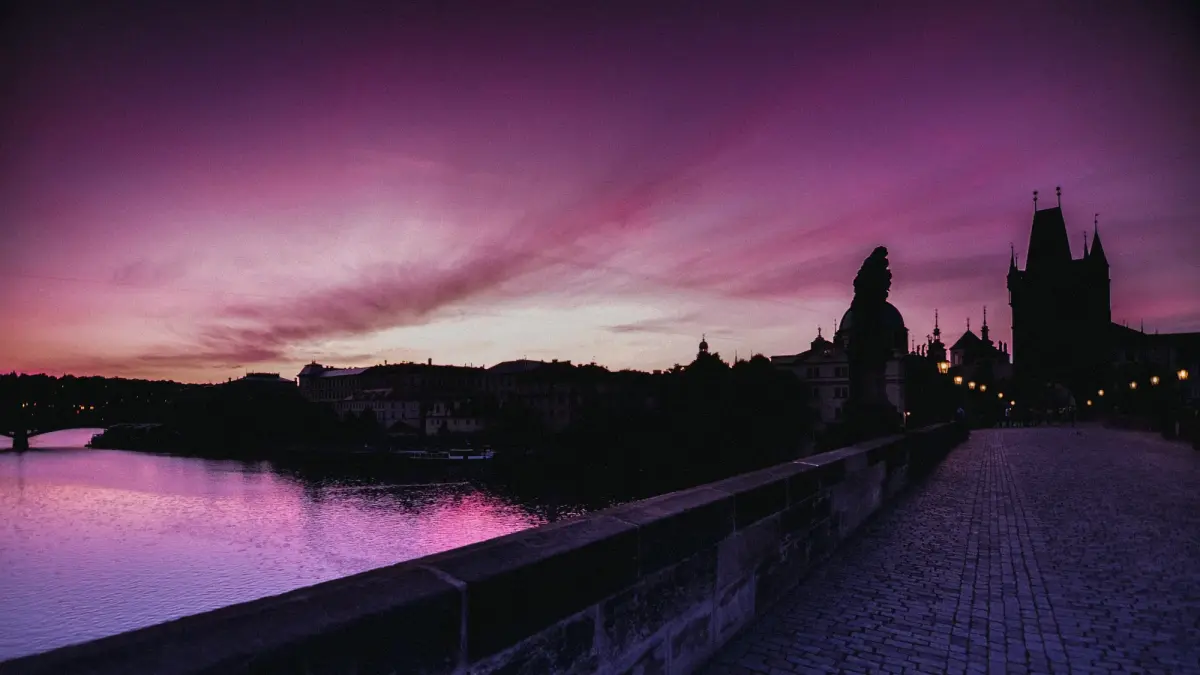
Historic streets seldom reveal everything at once. They bend, narrow, pass beneath archways, emerge onto a square or unexpectedly open onto a bridge. A tower first appears above the rooftops, gradually becomes a landmark and, a few minutes later, stands directly before you.
A town like this cannot be understood in a single glance. It has to be discovered step by step, almost like reading a chapter of a novel whose meaning emerges gradually rather than in its opening sentence.
Perhaps this is why Czechia often leaves a stronger impression in person than it does in photographs. A camera preserves a single view, but it loses the sequence: the street leading to the river, the hidden courtyard behind a gate, or the moment when one turn completely changes your perspective of the town.
In Many Historic Centres, the City Still Feels Human
Most of Czechia’s historic centres were shaped long before cities were designed around cars. Their streets, squares, courtyards and arcades were built for people moving at walking pace.
Here, you rarely feel overwhelmed by enormous distances. Squares can be understood at a glance, landmarks are close enough to reach on foot, and the town unfolds naturally instead of forcing you to travel from one isolated attraction to another.
This is not true of every part of Czechia. Like any modern country, it also has industrial districts, suburban developments and contemporary neighbourhoods.
Yet in many historic towns, the human scale has survived. The city does not ask you to admire it from afar. It invites you to walk beneath its arcades, step into its courtyards and discover how each corner quietly prepares you for the next.
Sometimes the Landscape Becomes Part of the Architecture
It would be inaccurate to say that every Czech town blends seamlessly into nature.
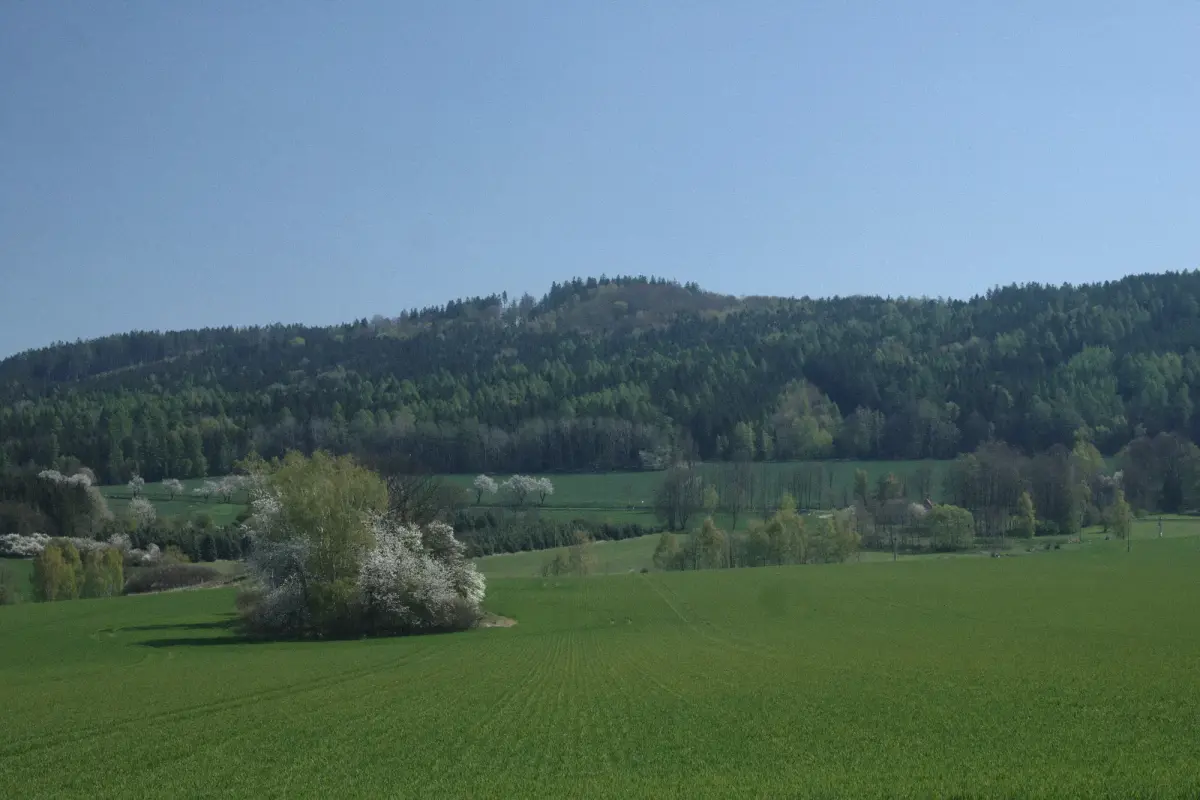
Yet in some of the country’s most remarkable places, rivers, hills and architecture form a single composition.
In Český Krumlov, the curve of the Vltava shapes the old town, while the castle occupies the high ground above it. In Telč, the historic centre sits between fish ponds and former fortifications. In the Lednice–Valtice Cultural Landscape, palaces, parks, avenues, lakes and farmland were deliberately designed as one vast ensemble.
In places like these, nature does not feel like scenery added around the town. The hill explains the castle. The river explains the streets. The park becomes a continuation of the palace rather than simply green space beside it.
The result is a landscape that feels inevitable, as though the town belongs exactly where it stands.
Harmony Needs Constant Care
A town can preserve every historic building and still lose its character.
All it takes is intrusive advertising, an out-of-scale building breaking the skyline or a series of insensitive alterations that ignore the rhythm of the streets.
This is why, in many of Czechia’s protected historic centres, preservation extends beyond individual buildings. Street layouts, rooflines, panoramic views and the character of the surrounding environment are also considered part of the heritage.
That does not mean Czechia is free from visual clutter or controversial modern architecture. It is not.
But in its best-preserved historic towns, it is far more difficult for new interventions to overwhelm the historic fabric. The town continues to feel like a connected place rather than a collection of monuments surrounded by unrelated development.
Why Harmony Is So Difficult to Explain
Perhaps Czechia feels harmonious not because every building is extraordinary. Most visitors probably never consciously notice the height of the cornices, the proportions of the streets or the way a tower quietly guides the eye across the skyline.
Yet these details shape the experience all the same. Different centuries keep their identities while remaining part of the same structure. Architecture stays connected to the human scale. Streets reveal themselves gradually. In some towns, the surrounding landscape completes the composition begun by the buildings.
Harmony lives not only in the architecture itself, but in the spaces between buildings, the rhythm of the streets, the skyline and the way one place naturally leads to the next.
That may be why Czechia is so difficult to capture in a single photograph. To understand its harmony, you have to walk through it. Only then does it become clear that its greatest beauty lies not in individual landmarks, but in the quiet relationships that hold everything together.