Most national parks are created to protect beautiful landscapes. Yasuní National Park protects something even rarer—an extraordinary concentration of life. A single hectare of forest here can contain more tree species than exist across all of North America. It is a place that reveals just how astonishingly rich nature can become when it has millions of years to evolve with very little human disturbance.
A Forest Where Life Is Almost Impossible to Count
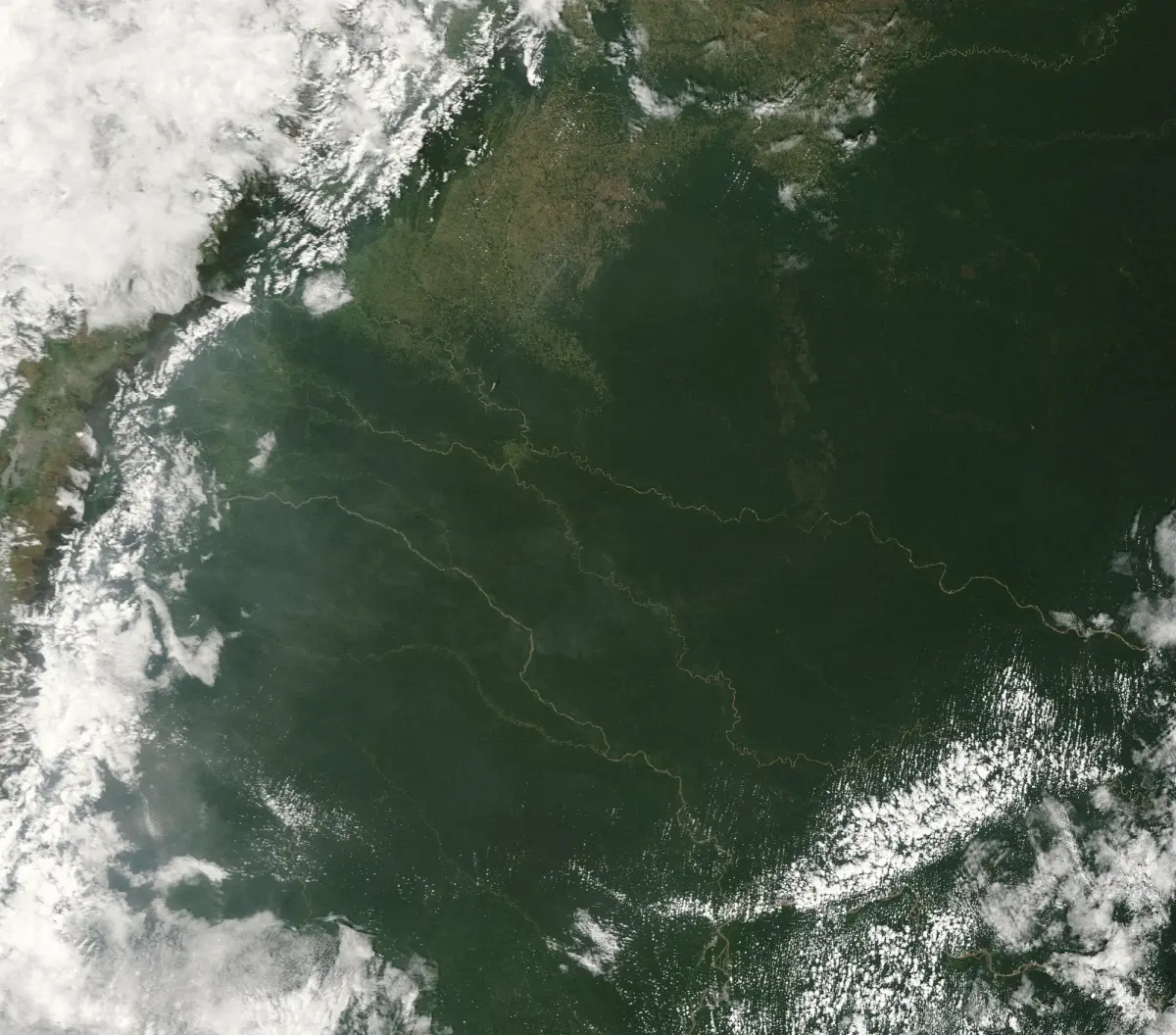
From above, Yasuní looks like an endless green carpet stretching to the horizon. Beneath that seemingly uniform canopy lies one of the most complex ecosystems on Earth. Thousands of species of plants, insects, birds, amphibians, reptiles, and mammals share just a few square kilometres of rainforest.
Every layer of the forest supports its own community of life. Some animals spend their entire lives high in the canopy, others never leave the dense undergrowth, and many emerge only after sunset, when the rainforest begins to sound completely different.
Why Is There So Much Life Here?
This incredible diversity did not happen by chance. Yasuní lies almost exactly on the equator, where warm temperatures remain stable throughout the year and abundant rainfall allows the forest to grow continuously without distinct seasons. These ecosystems have been evolving for millions of years, creating an enormous variety of ecological niches.
As a result, countless species have been able to live side by side without directly competing for the same resources. Each has developed its own food source, activity pattern, and place within the forest. That is why Yasuní is remarkable not simply because it contains so much life, but because that life is extraordinarily diverse.
One Hectare That Changes the Way You Think About Nature
The numbers associated with Yasuní almost sound impossible. Scientists have recorded more than six hundred tree species within a single hectare of forest. By comparison, fewer tree species grow across the whole of North America.
Yet the true wonder of Yasuní is not the record itself. The numbers simply help us imagine a level of biodiversity that is almost impossible to comprehend. Even while standing in one spot, you are surrounded by hundreds of plant and animal species, most of which you will never notice.
A Rainforest That Is Never Silent
Dense rainforest might seem like a quiet place. In reality, Yasuní is alive with constant movement and sound. Monkeys call from the treetops, birds answer one another across the canopy, insects create an endless chorus, and lizards rustle through the leaves. After dark, thousands of new voices join the forest.
Even when large animals remain hidden, the rainforest never feels still. Every minute reminds you that an immense web of life surrounds you, one that has existed for millions of years.
Seeing Wildlife Is a Matter of Luck
Yasuní is considered one of the world’s finest destinations for wildlife observation. Giant river otters, jaguars, tapirs, sloths, several species of monkeys, hundreds of bird species, and countless reptiles and amphibians all live here. The rainforest, however, does not place its animals on display.
That is exactly what makes every encounter so memorable. No one can predict what they will see on a particular day, and that sense of uncertainty is one of the greatest rewards of exploring the Amazon.
Practical Information
Where It Is
Yasuní National Park is located in eastern Ecuador within the Amazon Basin. Most journeys begin in the city of Coca, where visitors travel by boat along the rivers to remote eco-lodges and research stations deep inside the rainforest.
How to Get There
The first step is reaching Coca by domestic flight or long-distance bus. From there, the journey continues by motorised canoe, which may travel for several hours depending on the location of your lodge. The boat ride itself is already part of the Amazon experience.
How Much Time You Need
Most visitors stay for at least three days. However, spending four or five days in Yasuní provides a much richer experience, allowing time to explore different parts of the forest, join night walks, and increase your chances of seeing rare wildlife.
When to Visit
Yasuní can be visited throughout the year. Water levels in the rivers rise and fall with the seasons, affecting both travel routes and excursion activities. Each season offers different experiences, so there is no truly bad time to visit.
What to Bring
Lightweight long-sleeved clothing, waterproof footwear, insect repellent, a rain jacket, a hat, and binoculars are all highly recommended. Waterproof bags for cameras and electronics are also essential because humidity in the rainforest remains extremely high throughout the year.
Is It Worth Visiting?
Yasuní is an extraordinary destination for travellers who want to experience nature as a living system rather than simply admire beautiful scenery. There are no dramatic mountain panoramas or famous architectural landmarks here. Instead, the greatest attraction is everywhere around you—in every tree, every leaf, and every sound echoing through the rainforest. Few places on Earth offer a better opportunity to appreciate just how much life can exist within a single piece of forest.